A Professional Framework Targeting 20–40% Monthly Performance
Important Disclaimer: This document is for educational and strategic purposes only. There is no guarantee of profit in Forex trading. A 20–40% monthly performance target is aspirational, not guaranteed, and highly dependent on market conditions, risk management, discipline, and trader experience. All trading decisions are made at the individual’s own risk.
Executive Summary
This document presents a professional Forex trading framework designed with a CEO-friendly mindset—clear, structured, and focused on decision-making, risk control, and performance evaluation. Rather than promoting “secret indicators” or unrealistic promises, this strategy emphasizes process over prediction, capital protection over excitement, and consistency over short-term wins.
The strategy is built around four core pillars:
- Market structure and price behavior
- High-probability execution rules
- Institutional-grade risk management
- Business-style performance evaluation
The objective is not to trade more, but to trade better, creating a repeatable system capable of delivering strong monthly performance during favorable market conditions while protecting capital during unfavorable ones.
1. Strategic Philosophy
1.1 Trading as a Business
This strategy treats Forex trading as a capital allocation business, not a speculative hobby. Like any professional business, it requires:
- A clear operating plan
- Defined risk limits
- Measurable performance metrics
- Continuous review and improvement
Each trade is considered a business decision, not a gamble.
1.2 Probability Over Certainty
Markets cannot be controlled or predicted with certainty. What can be controlled is:
- Entry quality
- Risk exposure
- Execution discipline
This strategy operates on probabilistic thinking—entering trades only when the odds are clearly favorable and the downside is predefined.
1.3 Capital Preservation First
The primary objective is not profit, but survival and longevity.
“If capital is protected, opportunity will always exist. If capital is lost, opportunity ends.”
Every rule in this strategy ultimately serves capital protection.
2. Market Structure Framework
2.1 Multi-Timeframe Alignment
The strategy uses a top-down, multi-timeframe approach:
- Higher Timeframe (HTF): Daily & H4 – defines dominant trend and institutional bias
- Mid Timeframe: H1 – confirms structure and momentum
- Lower Timeframe (LTF): M15 / M5 – precision execution
This hierarchy ensures trades align with dominant market forces while maintaining tight risk control.
2.2 Market Condition Filtering
Not all markets are tradable. This framework avoids:
- Low-volatility ranges
- Choppy, structureless price action
- High-impact news volatility without confirmation
Focus is placed only on:
- Clear trends
- Defined support and resistance
- Strong liquidity participation
3. Analytical Tools
3.1 Price Action as the Core Signal
Price is the only leading indicator. Decisions are based on:
- Market structure (HH, HL, LH, LL)
- Support & resistance zones
- Supply & demand imbalance
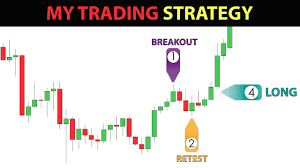
- Break-and-retest patterns
- Liquidity sweeps and stop hunts
3.2 Minimalist Indicator Support
Indicators are used strictly as confirmation tools, never as primary signals:
- Moving Averages: Trend filtering
- RSI: Momentum and divergence
- ATR: Volatility-based stop placement
This keeps analysis clean, objective, and repeatable.
4. Trade Entry Rules
4.1 Mandatory Entry Checklist
A trade is executed only if all conditions are met:
- Higher timeframe trend is clearly defined
- Price is located in a high-value zone
- Lower timeframe confirmation appears
- Minimum risk-to-reward ratio of 1:3
If even one condition is missing, no trade is taken.
4.2 Sample Trade Scenario
- Daily trend: Bullish
- H4 retracement into demand zone
- M15 bullish engulfing candle
- Stop-loss below structural low
- Take-profit at higher timeframe resistance
Execution is rule-based, not discretionary.
5. Institutional-Grade Risk Management
5.1 Risk Per Trade
- Fixed risk per trade: 0.5%–2% of account equity
- No exceptions, regardless of confidence level
5.2 Drawdown Protection Rules
- Maximum daily drawdown: 3%
- Maximum weekly drawdown: 6%
If limits are reached, trading stops immediately.
5.3 Position Sizing Logic
Position size is calculated based on:
- Stop-loss distance
- Volatility conditions
- Account risk percentage
Never based on emotion or intuition.
6. Money Management and the 20–40% Target
6.1 Understanding the Performance Range
A 20–40% monthly return is not achieved through one large trade, but through:
- Consistent execution
- High reward-to-risk ratios
- Controlled downside exposure
6.2 Performance Model Example
- 10–15 trades per month
- 40–50% win rate
- Average R:R of 1:4
Mathematically, this supports strong monthly performance during optimal conditions—not every month, but consistently over time.
7. Trading Psychology for Decision-Makers
7.1 Emotion Elimination by Design
This strategy is engineered to reduce:
- Fear of missing out (FOMO)
- Revenge trading
- Overconfidence after winning streaks
Rules replace emotion.
7.2 Discipline Over Motivation
Professional traders do not rely on motivation. They rely on process compliance.
8. CEO-Friendly Trading Plan Structure
8.1 Pre-Market Preparation
- Review economic calendar
- Identify high-probability currency pairs
- Define daily directional bias
8.2 Market Execution Phase
- Wait patiently for valid setups
- Execute strictly according to rules
- No improvisation
8.3 Post-Market Review
- Log every trade
- Review execution quality
- Identify process errors
9. Performance Tracking and Review
9.1 Trading Journal Metrics
Each trade records:
- Entry rationale
- Risk parameters
- Before/after screenshots
- Emotional state
9.2 Key Performance Indicators (KPIs)
Trading performance is evaluated like a business:
- Expectancy
- Maximum drawdown
- Consistency score
10. Strategy Scalability
This framework is scalable and adaptable:
- Individual traders
- Proprietary trading firms
- Small trading teams
With documented SOPs and strict risk rules, performance becomes measurable, controllable, and scalable.
Conclusion
This strategy does not promise instant wealth. Instead, it offers something far more valuable:
A professional trading framework built on discipline, structure, and risk intelligence.
For CEOs, investors, and serious traders, this approach aligns Forex trading with business logic, turning uncertainty into managed opportunity.
“Profit is a byproduct of a well-executed process
Summary:
You have found the right one! My Forex Strategy have prove to pay a return of 40-100% per month for more then two years now. Learn how to do the same!
Keywords:
managed forex, manged forex accounts, safe forex, safe fx, forex strategy, safe fx trading
Article Body:
You have found the right one! My Forex Strategy have prove to pay a return of 40-100% per month for more then two years now. I have decided to open up for new managed forex accounts.
Don’t you feel safe about transferring all your savings to a stranger?
Most Forex program required you to transfer the money you want to have traded the their account. In this way you don’t have much control over your money and you have to trust the Forex managers to pay you the profit. Most of the time you don’t see your money again.
I don’t ask you to send any money to me at all! My Forex Managed Program works different, You set up your own account with any MT4 broker and give me access to trade the account. By the end of the month you pay me the profit. Yes that’s correct. You are the one with the control over the money. You never have to trust a Forex manager again for getting your profit. Since the money is in your account I can not take out any of the money!
What is your trading strategy and how does it work?
I use a combination of a break-out system and a intra-day trading system to getting the results. Part of the system is running on an EA (automated forex trading program) and part is manually trading. You can not buy the EA, and I never put it up for sale.

Tinggalkan Balasan